 If you walk through a Chinese electronics market, you'll find countless wearables, including a variety of smartwatches. Why, then, is this China-exclusive a significant introduction? Well, the Appscomm Fashioncomm A1 is the first smartwatch to include the Mirasol display we first saw in Qualcomm's Toq prototype, which means that 1.55-inch MEMS panel is actually coming to market. The A1 delivers much of the functionality we experienced with the device in our September hands-on, with an added GSM chipset, enabling you to make and receive calls directly from your wrist.
It's not the first watchphone we've seen -- and past iterations can hardly be deemed a success -- but as the first such device to integrate Qualcomm's new Mirasol panel, it's at least worth a casual mention. With the A1, Appscomm is also bundling an integrated camera, letting you snap stills and video clips a la Samsung's Galaxy Gear. There's also Bluetooth connectivity, along with a 450mAh battery that's rated for up to 190 hours of standby time. Smartwatch enthusiasts based in China can pre-order the device for RMB 1,299 ($213) beginning today.
Via: Engadget


SEOUL (Reuters) - Samsung Electronics Co <005930.KS> said on Tuesday its Galaxy Gear has become the world's most popular smartwatch with shipments reaching 800,000 since its debut two months ago, defying some market concerns the accessory would fail due to a lack of compelling features.
The South Korean firm said Gear sales have been better than its own expectations and it would expand sales promotions for the wearable device for the crucial year-end holiday sales.The company's statement referred to sales of the smartwatch, but Samsung later clarified that it was basing its figures on shipments to retailers and mobile operators.
Samsung has poured marketing resources into the Gear with heavy advertisements and collaborations with fashion shows to seize leadership in the wearable computer market after the device got off to a rocky start after being critically panned by reviewers.
Well-known tech reviewer David Pogue, who recently left the New York Times to start a new consumer-tech web site at Yahoo (YHOO.O), described its design as "inconsistent and frustrating" and recommended nobody buy it.
The product marks Samsung's latest attempt to prove that it is more than just a fast follower in innovation behind Apple Inc (NSQ:AAPL). The Cupertino California-based firm is widely speculated by media and analysts to be working on wearable device.
Priced at around $300, the Gear works as an accessory to its market leading Galaxy smartphone, with a small OLED screen offering basic functions like photos, hands-free calls and message notifications.
Market expectations on the device have been not so strong, as it has only around 70 dedicated applications.
UK retailer Phones4U offered the Gear for free to consumers buying the Galaxy Note3 on contract earlier this month, while earlier media reports said that the device was suffering some 30 percent return rates in U.S. stores of Best Buy.
"It's the most sold wearable watch available in the market place...and we plan to expand its availability by expanding mobile devices that work with the Gear," Samsung said in a statement.
Via: Yahoo News

The problem, according to Gartner, is a combination of premium pricing and "unclear value proposition," and that this will instead drive consumers towards tablets and fitness bands.
"The convenience aspect of using a watch for interaction while leaving the larger-screen phone or tablet in the bag or pocket is something that users can relate to and probably recognize its value," said Ms. Zimmermann. "However, there are still several significant barriers to mainstream adoption, including low interest and awareness among consumers, poor design and price.""Samsung and other well-known vendors have recently entered the smart watch space, yet the products we have seen so far have been rather uninspiring in terms of design, available apps and features," said Annette Zimmermann, principal research analyst at Gartner. "As a result, Gartner predicts that wearable devices will remain a companion to mobile phones at least through 2017, with less than one percent of premium phone users opting to replace their phone with a combination of a wearable device and a tablet."
Take Samsung's Galaxy Gear as an example. Here is a companion device that connects to the Galaxy Note 3 phablet, but for $300 the value it adds is hazy at best. It is also restricted to working with only one device, limiting both its appeal and market.
Earlier this week a report claimed that Samsung has shipped 800,000 Galaxy Gear smartwatches.
And that $300 could be far better spent, for example, on another tablet.
My experience with wearable devices suggests that there are many tech-related issues that need addressing. Battery life, charging, usability, robustness, style, upgradeability, and reliability are all aspects that need to get better.
Take the Jawbone Up as an example. I wear one daily and find it relatively useful, but in real terms it is an overpriced, underfeatured "dumb" device that relies on a tethered custom charger (wireless would be easier), and has parts that fall off and are easily lost.
Smartwatches have a long way to go, and given that the smartphone has demonstrated that consumers prefer a convergence device over having to carry several different devices, they might be a tough sell.
Via: ZDNet
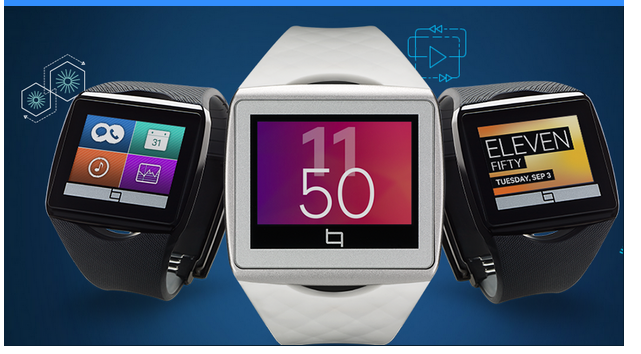
Qualcomm has announced the availability of the Tog smartwatch, a gadget the firm says will "transform the wearable device" industry.
The chip maker's wearable tech offering, the Tog smartwatch, will be able to connect to Android smartphones in order to allow wearers to extend the functionality of their phones to their wrists. The Tog contains Mirasol display technology which utilizes reflective display technology to keep the display clear even in bright sunlight, WiPower LE technology for wireless charging on the go, and also come equipped with wireless stereo headphones that let you listen in through Bluetooth -- and without the need for wires.
In addition, the smartwatch uses Bluetooth to let wearers accept or reject calls, view text messages and meeting alerts, and selectively receive notifications from their smartphones to their wrists. In addition to this smartphone functionality, the smart watch is preloaded with weather notifications and stock applets. The chip maker says that the Tog is capable of running for days on a single charge.
The smartwatch can connect with smartphones running 4.0.3 and above, although Android 4.3 Jelly Bean preferred.
Dr. Paul E. Jacobs, chairman and chief executive officer of Qualcomm said:

The SmartWatch 2 doesn’t shoot photos or video. It doesn’t respond to voice commands. And it doesn’t have a microphone, so you can’t use it for phone conversations that look something like this. But those are all features that often feel like beta experiments in the Galaxy Gear. The SmartWatch 2 honors simplicity over feature depth, and the result is a gadget that’s only intermittently frustrating, not consistently frustrating like Samsung’s take on the smartwatch concept.
Strap the SmartWatch 2 to your wrist. Use it to check notifications of who’s emailing, texting, or calling you. It offers few thrills, but imposes a little less pain than its direct competition does. And maybe that’s something of a moral victory in today’s screwed-up smartwatch market.
Smartphone support for (nearly) all
I’ll try not to pit Sony’s watch against Samsung’s watch at every turn, but I need to clarify three major differences up front. First, the SmartWatch 2 works with any phone running Android 4.0 or later. This feature is significant, because at press time the Gear pairs only with a single phone, the Samsung Galaxy Note 3 (though support for more Samsung phones is imminent). The SmartWatch 2 also offers significantly more battery life than the Gear: between three and seven days as opposed to a mere 12 to 24 hours. And at $200, the SmartWatch 2 costs a full C-note less than the Gear.
These are important distinctions. Both watches depend on smartphones for their key functions, so Sony’s liberal, big-tent approach to hardware compatibility is welcome. And don’t underestimate the importance of battery life: If your smartwatch can’t even last through the day, you don’t lose only its mobile-app functions—you also lose the display on your wrist that shows you the time.
Via: PCWorld

Faster Reaction
HTC doesn’t comment on rumors or speculation, it said in an e-mailed response to questions about the smartwatch from Bloomberg News.
Wang, who was joined by Chief Executive Officer Peter Chou, held a 90 minute town hall meeting with workers, including a question and answer session, Ho said.
Wang emphasized the importance of after-sales service to ensure customer loyalty and repeat business for its handsets, according to Ho.
Chou, who took over as president in 2004, has struggled to compete with devices from Apple, Samsung and an array of Chinese entrants driving prices down.
HTC, once the biggest seller of smartphones in the U.S., saw its share of the global market drop by more than half in the second quarter. The company has issued redesigned versions of its flagship HTC One model and has hired actor Robert Downey Jr. in a renewed push to promote its brand.
HTC’s third-quarter net loss was NT$2.97 billion ($101 million), it reported Oct. 4, wider than the NT$1.71 billion loss according to the average of 16 analysts’ estimates compiled by Bloomberg. Sales of NT$47 billion missed the NT$54 billion average of analysts’ estimates.
Source : Bloomberg

Samsung is set to reveal its Galaxy Gear smartwatch next Wednesday, Sept. 4, in Berlin. But this weekend, we got a first look at the watch.
Here it is.
The press has been speculating about the hardware and design, and leaking information, since word got out that the company would be designing its smartwatch to rival new and yet-to-be-released gadgets from Sony, Apple and Pebble.
We’ve been speaking with sources to separate fact from fiction. And this weekend, a source showed us one of the prototypes sent to developers and a few select partners. Note that Samsung is highly security conscious in protecting its designs, and occasionally sends off prototypes that don’t mirror the final design. But it won’t be far off.
My source, who requested anonymity, also showed me an internal promotional marketing video for the watch. The video was not developed by Samsung, but by an independent team working closely with Samsung. I wasn’t allowed to photograph the smartwatch itself, but I snapped a few stills from the video, which clearly shows the high-quality OLED display, with its square screen. I also made some sketches based on my time with the watch.
I’ll walk you through the specs, and then offer a few insights about potential use-cases for Samsung’s smartwatch. Health and fitness junkies will be intrigued. My initial impression was that it’s a new wearable fitness device to rival a Nike Fuelband or Fitbit Flex — a smartphone companion rather than a smartphone alternative.
Read more at http://venturebeat.com/2013/09/01/this-is-samsungs-galaxy-gear-smartwatch-a-blocky-health-tracker-with-a-camera/#EVTO5hDXaOQQrGEO.99
Subscribe to:
Posts (Atom)


Recent Comments